
Grip Strength as a Predictor of Healthy Aging
Dive in to the science behind why grip strength is a surprisingly good predictor of how well you’re aging
A strong handshake to live longer?
Having strong grip strength sounds like a party trick but it’s a surprisingly potent indicator of how well you’re aging. In one of the largest health-related studies ever run, tracking nearly 140,000 people across 17 countries for several years, it turned out to be a better predictor of whether someone would die than their blood pressure was. And this wasn’t just a mild correlation - it’s a real, repeatable signal, and one you can measure in about ten seconds.
Why a hand-squeeze test tells you anything at all
Before we get ahead of ourselves, the main takeaway from this study isn’t that grip strength itself is the important part. Nobody's health depends on how hard they can crush one of those old school hand grippers or a dynamometer (fancy in-office test used to measure grip strength). What makes grip strength useful is that it's a cheap, fast proxy for something much bigger: your overall muscular strength, your neuromuscular function (how well your brain and muscles are still talking to each other), and to some extent your general physiological resilience. Losing grip strength over time tends to track with losing strength everywhere else - legs, trunk, everything. It's less of a specific measurement and more a window into how your whole system is holding up.
The Research: The PURE study
In the Prospective Urban Rural Epidemiology (PURE) study - a 17-country cohort of nearly 140,000 adults tracked for a median of 4 years - every 5 kg drop in grip strength was linked to a 16% higher risk of death from any cause and a 17% higher risk of cardiovascular death. After adjusting for other health factors, grip strength predicted death better than systolic blood pressure did - one of the most common numbers we all get checked at every doctor's visit.
One nuance worth keeping in mind, because it's the honest version of this story rather than the punchier one: blood pressure was actually the stronger predictor of whether someone went on to develop cardiovascular disease in the first place. Grip strength's edge was specifically in predicting death - in people who already had risk factors stacking up, low grip strength flagged who was in more danger. Both numbers matter. They're just saying different things.

What's probably going on
This is an association, not a randomized trial - the study didn't have half the group train their grip and the other half not. So the honest read is that low grip strength is a marker of trouble, not necessarily the cause of it. A few things likely explain why it tracks so well with mortality risk: muscle mass and strength decline with age (sarcopenia), and that decline accelerates with inactivity, illness, and inflammation. Grip strength is simply an easy place to see that decline happening, years before it shows up anywhere else. Weak grip in an older adult is often less about the hands and more a signal that overall muscle mass, mobility, and resilience are eroding underneath the surface.
What this doesn't mean: go out and buy a hand gripper
The takeaway from this research isn't “train your grip.” Grip strength is a marker of overall strength and muscle mass, not an isolated muscle group you need to chase. Squeezing a hand gripper for reps doesn't move the needle on the things that actually matter - full-body muscle mass, functional strength, and the kind of resilience that shows up as better grip strength as a side effect, not the goal.
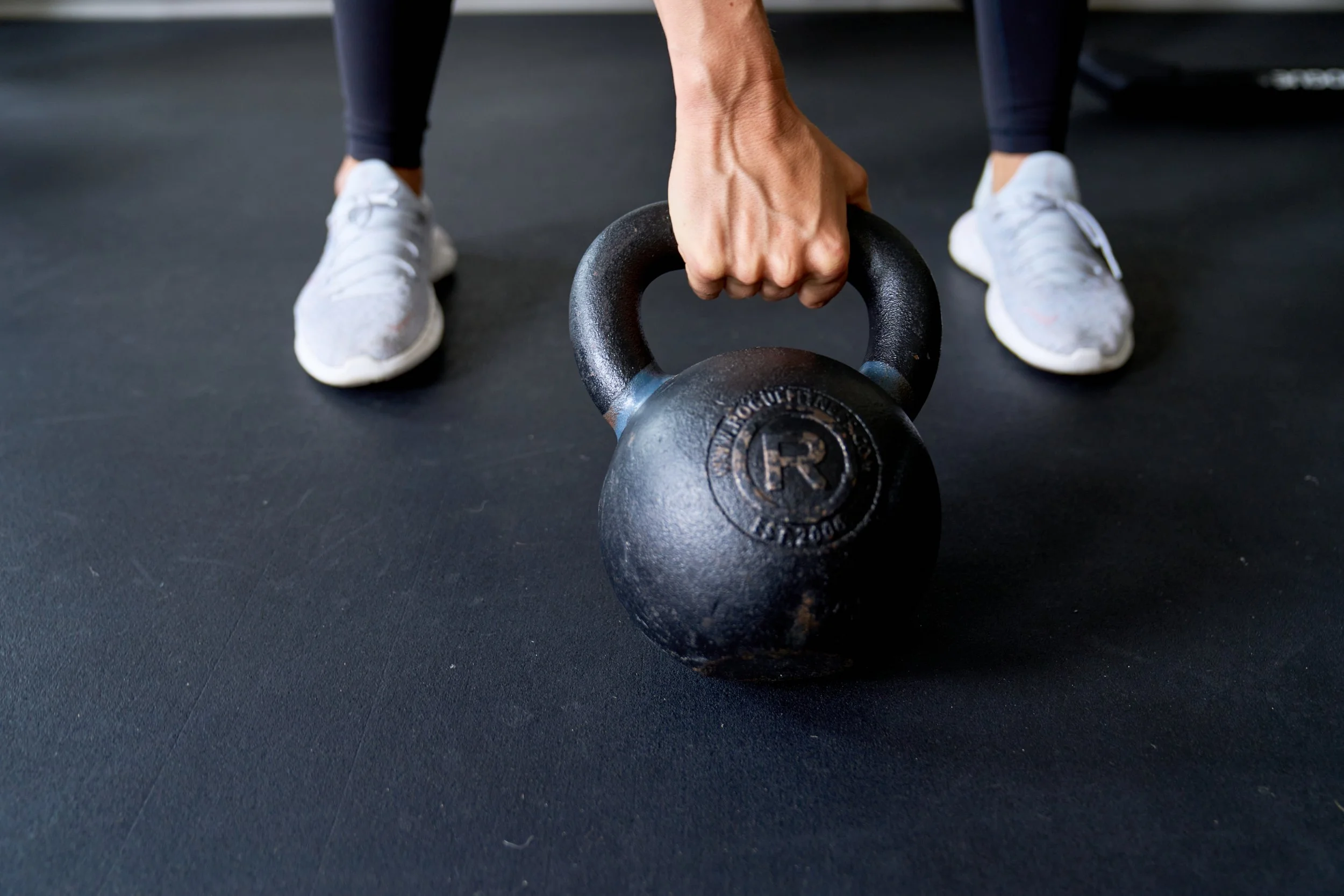
If you want your grip strength trending in the right direction over the next decade, the actual answer is boring and familiar: strength train, full body, consistently. Deadlifts, farmer's carries, rows, chest and shoulder press, KB swings and pretty much any exercise that has you holding a challenging weight in your hands will build grip strength as a byproduct of building everything else. One of the most common reports we get from people after strength training with us for 6+ weeks is that their grip got stronger. Not because we trained the grip itself but because we have people pick up and move a lot of heavy stuff.
The takeaway
Grip strength is a genuinely useful, well-studied marker of how someone is aging - and one you could self-check at home with a cheap hand dynamometer if you wanted to track it over time. But it's a mirror, not a lever. The way to improve it is the same way you'd improve almost anything else about long-term health and resilience: consistent full-body strength training.
If you're not sure where your baseline strength stands, or want a program built around long-term resilience rather than just aesthetics, book a visit with Drs Tim or Laura at Back Bay Health.