
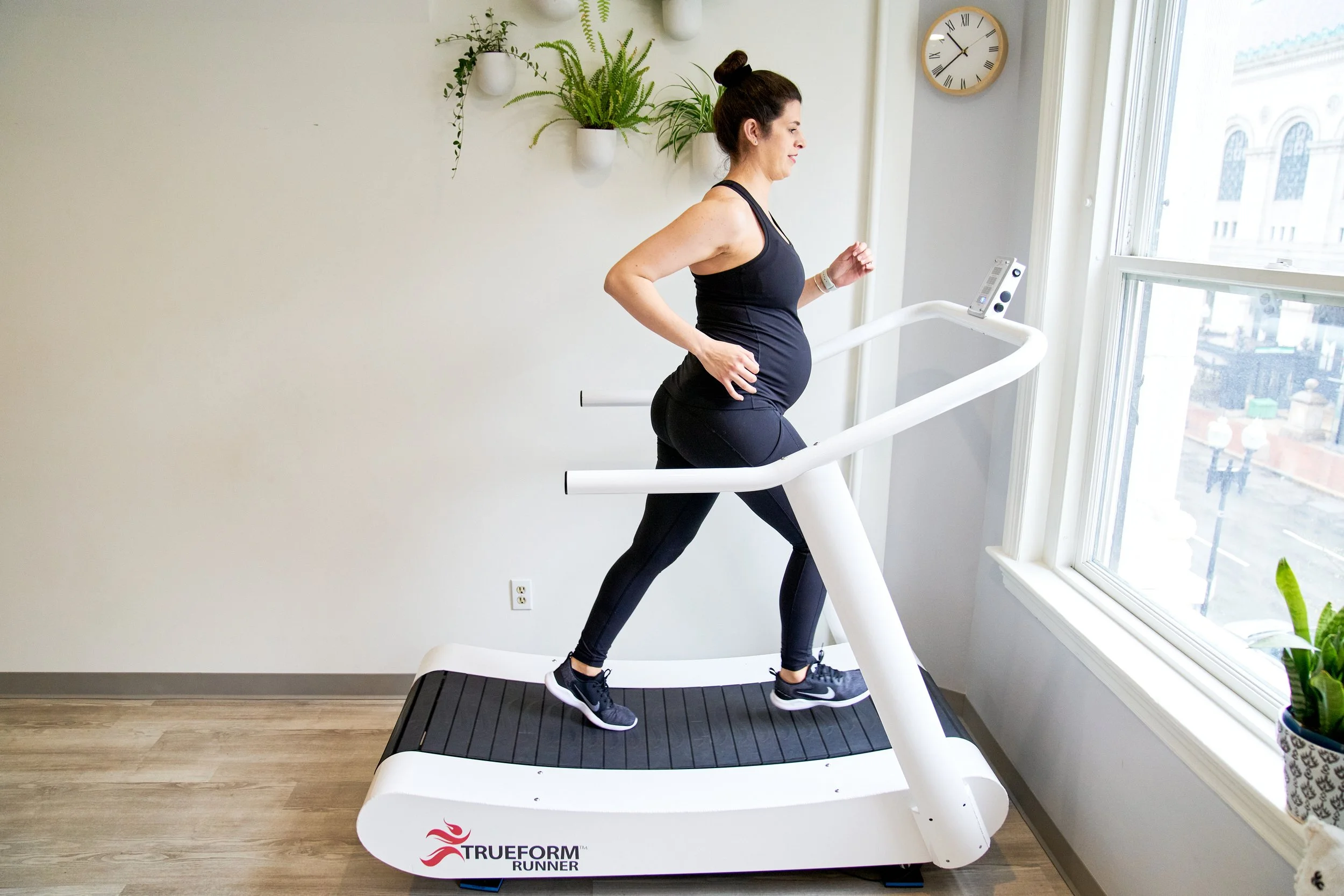
If you've been told to "stay at a conversational pace" or "keep your heart rate below 140" during pregnancy, you're not alone. These are two of the most common pieces of exercise advice given to pregnant people, and they're both more nuanced than they sound.
The 140 BPM Rule: Where It Came From and Why It's Still Circulating
In 1985, ACOG (the American College of Obstetricians and Gynecologists) published its first exercise guidelines for pregnancy, which included a recommendation to keep heart rate below 140 BPM. At the time, research on exercise during pregnancy was essentially nonexistent. It was expert opinion, a reasonable starting point, but not evidence-based.
By 1994, that specific metric was removed from ACOG's recommendations after the research caught up. And yet, studies show that a majority of OBs are still giving this advice to patients today.
The problem isn't just that it's outdated. Heart rate also isn't an accurate gauge of exertion during pregnancy. Your resting heart rate is already elevated from being pregnant, so a well-conditioned athlete and someone brand new to exercise will hit 140 BPM at completely different levels of effort. The number alone tells you very little.
Current ACOG guidance recommends exercising at a moderate to vigorous intensity for most healthy pregnancies, and supports continuing at your pre-pregnancy training intensity if that's what your body is used to.
The "Conversational Pace" Recommendation
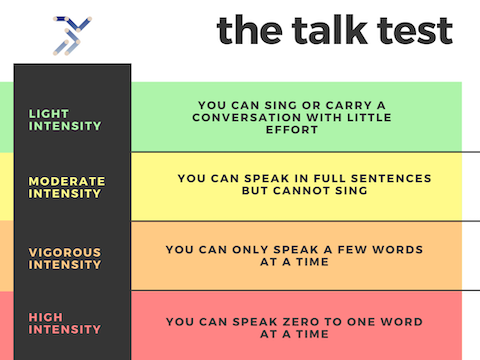
The talk test is a legitimate, well-studied tool for measuring exercise intensity. Here's how it maps across the four recognized intensity categories:
Light: You can hold a full conversation or sing with minimal effort
Moderate: You can hold a conversation, but singing is no longer comfortable
Vigorous: You can only speak a few words at a time
High Intensity: You can manage one word or none
Staying in a moderate, conversational zone makes sense for a lot of people. But applying it as a blanket rule for all pregnant people is where the nuance gets lost.
If you were already running fast, lifting heavy, or training at high intensities before pregnancy, your body is adapted to that level of stress. A 2022 study by Prevett et al. found that continuing higher-intensity training through pregnancy was not associated with adverse outcomes in well-conditioned individuals.
Pregnancy generally isn't the time to dramatically ramp up intensity. But if you have a solid training history, it's also not a reason to dramatically pull back.
What Actually Matters
Exercise guidance during pregnancy needs to be individualized. Your training history, current symptoms, fitness level, and pregnancy-specific factors are all more meaningful than hitting an arbitrary number on your watch or defaulting to a single metric.
For experienced athletes, perceived effort and how you feel during and after training are often the most reliable guides.
Working With a Provider Who Gets It
If you're an active person trying to figure out what training should actually look like during your pregnancy, the answer isn't one-size-fits-all. That's exactly what we help with at Back Bay Health. Book a free 15-minute discovery call to talk through your specific situation.
