
The Sitting to Rising Test. A 30-second screen that requires no equipment and potentially says more about how you're aging than most gym tests.
In our recent post, we wrote about grip strength and why a firm handshake can track with long-term health. This month's test asks you to sit down on the floor, then stand back up. No hands, no knees, no grabbing the couch. It might sound easy but it can be surprisingly tricky.
What the research found
The sitting-rising test was developed by Brazilian exercise physician Dr. Claudio Gil Araújo and his team at an exercise medicine clinic in Rio de Janeiro. Two large studies have put it on the map.
The original study (2014). Researchers tested 2,002 adults aged 51 to 80 and followed them for a median of 6.3 years. People with the lowest scores had roughly 5 to 6 times the risk of dying during the study compared with people who scored 8 or higher. Every one-point improvement in score was associated with about a 21% lower risk of death.
The follow-up (2025). A larger study tested 4,282 adults aged 46 to 75 and followed them for a median of about 12 years. Compared with people who scored a perfect 10, those scoring 0 to 4 had about 3.8 times the risk of dying from natural causes and about 6 times the risk of dying from cardiovascular disease. Even middle scores (4.5 to 7.5) carried higher risk.
Why a floor test would predict anything
Getting down to the floor and back up without help takes a combination of leg strength, hip and ankle mobility, balance, coordination, and a body weight you can move efficiently. This one test checks all of these boxes in a single movement, which is likely why it's such a strong signal.
It also mirrors daily life: picking something up off the floor, playing with kids, getting up after a fall. Losing that ability is often an early sign of the slow slide toward frailty.
How to take the test
Safety first. Don't do this alone. Have a partner nearby to score you and help steady you if you lose your balance. Clear some space, take your shoes and socks off, and use a carpet or mat. Skip the test if you have significant hip, knee, or back pain, a recent joint surgery or injury, or a history of dizziness or falls. Ask us about a safer version instead.
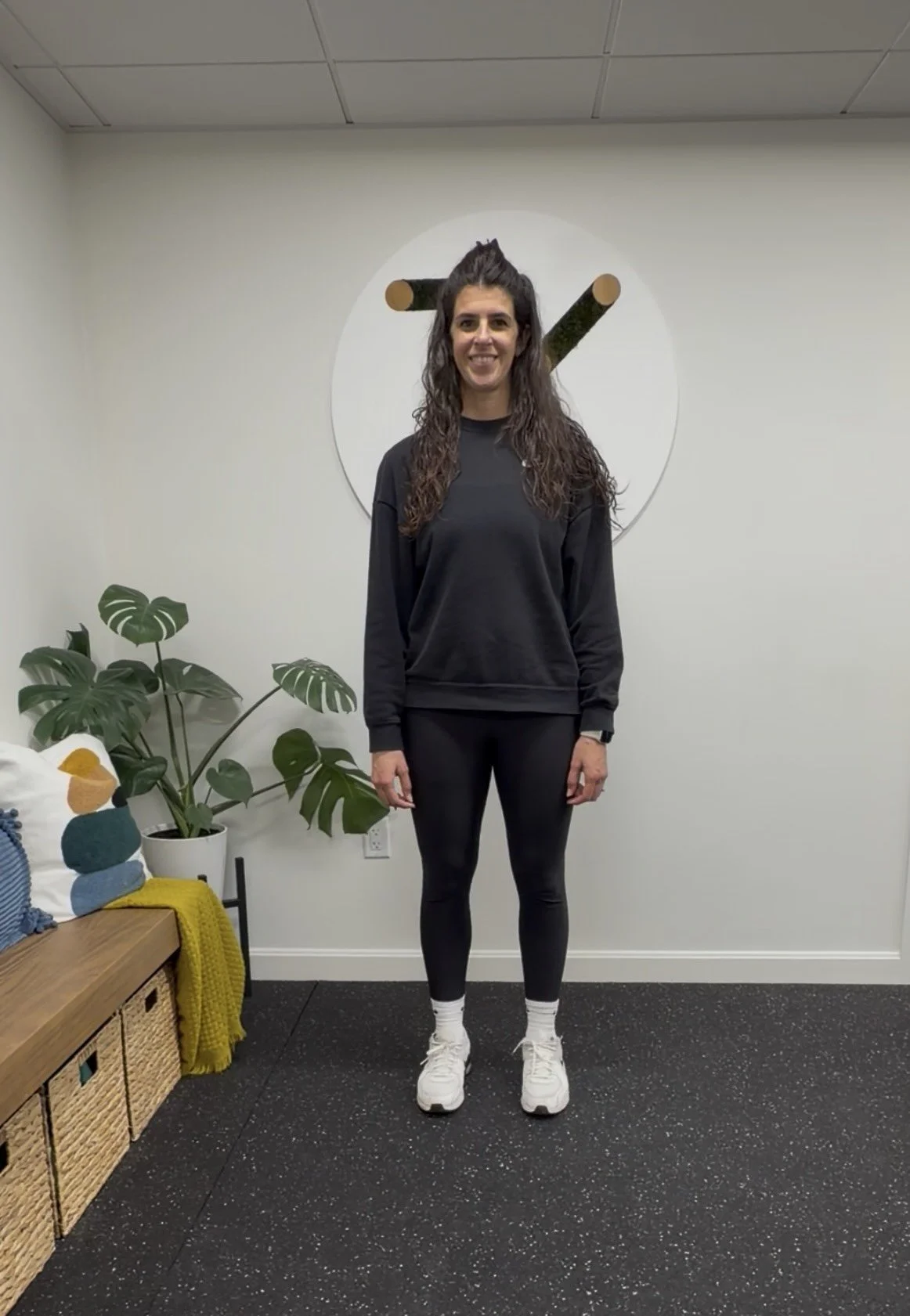
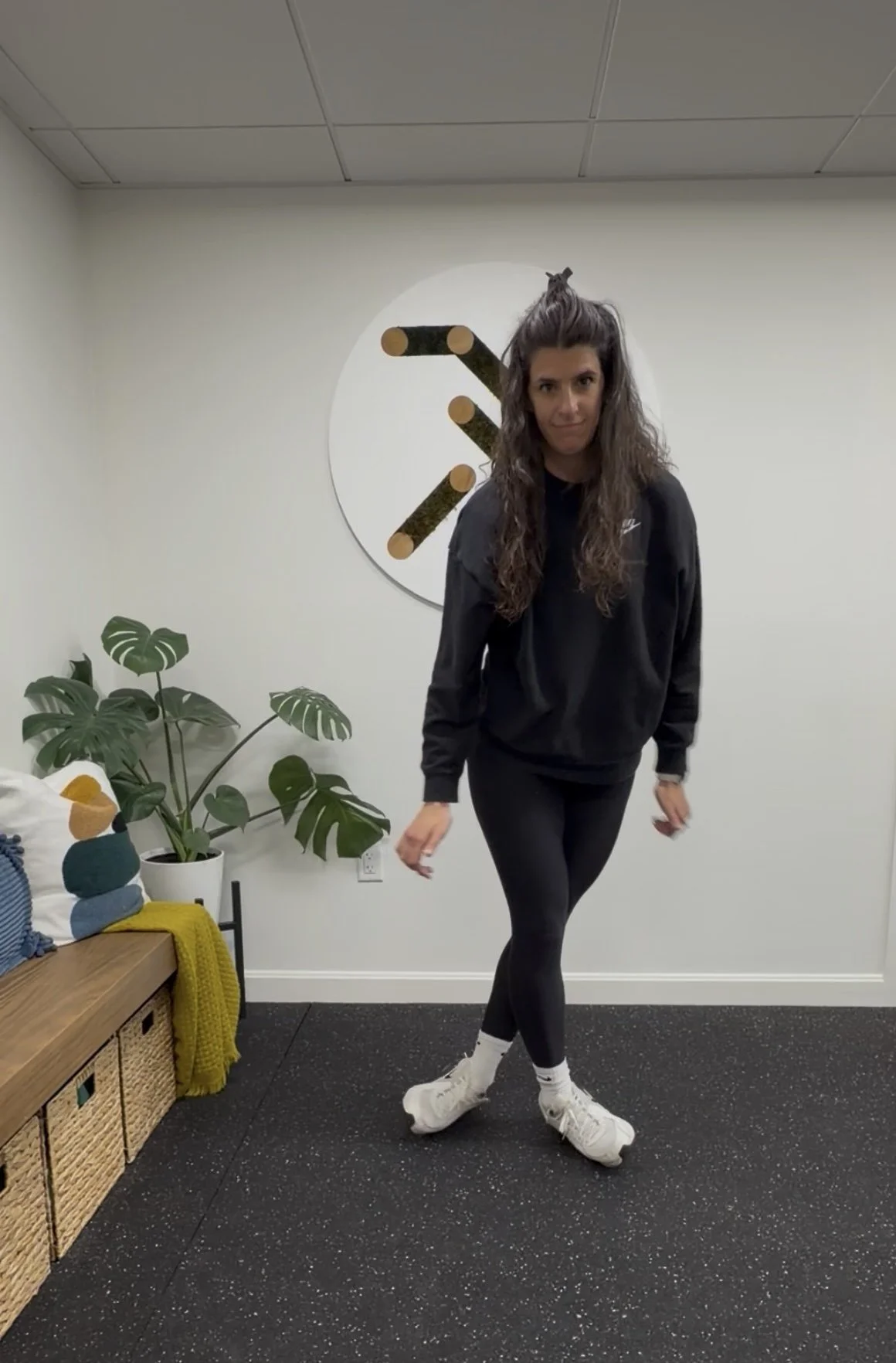
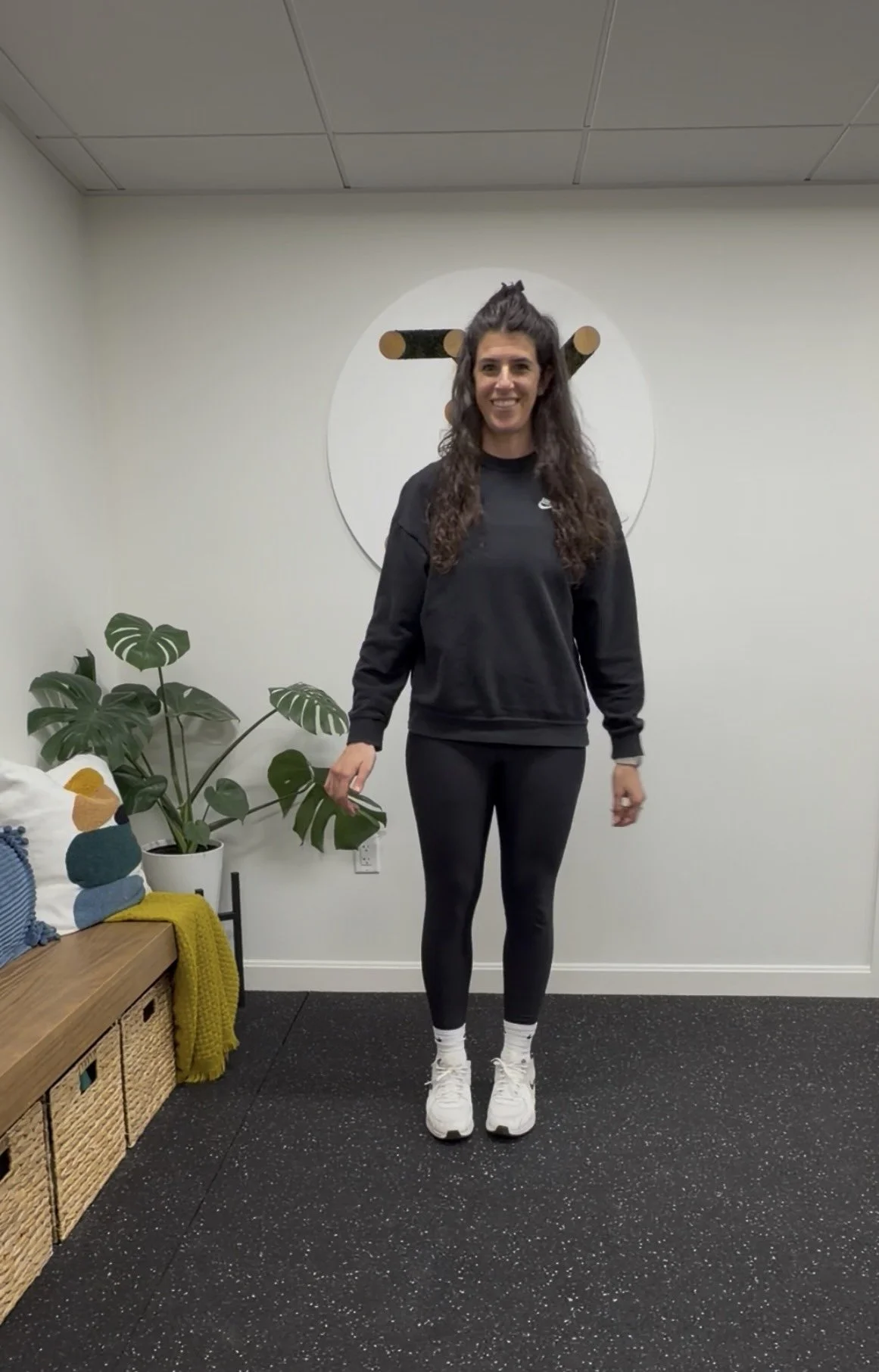
Stand with your feet a little apart.
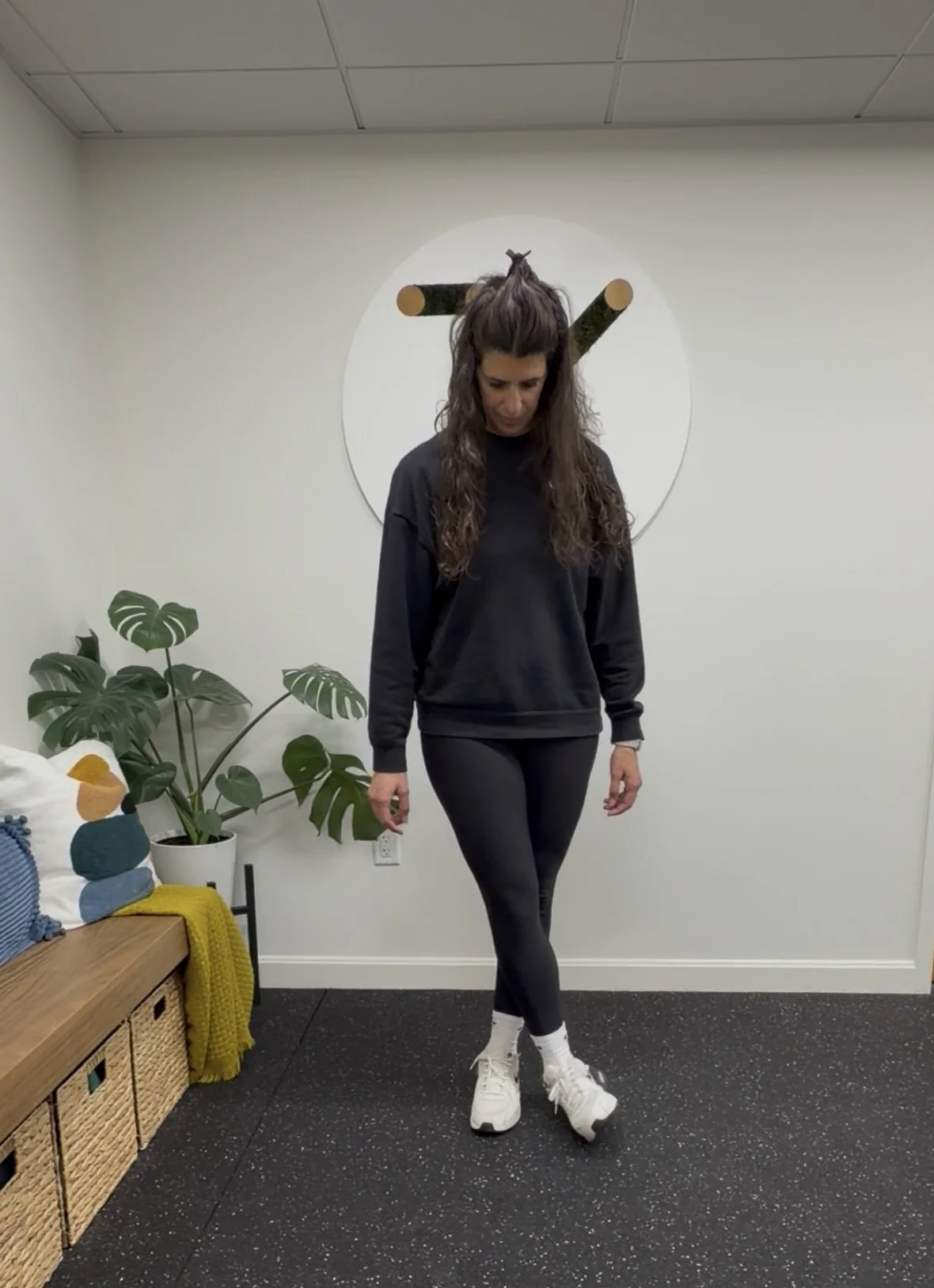
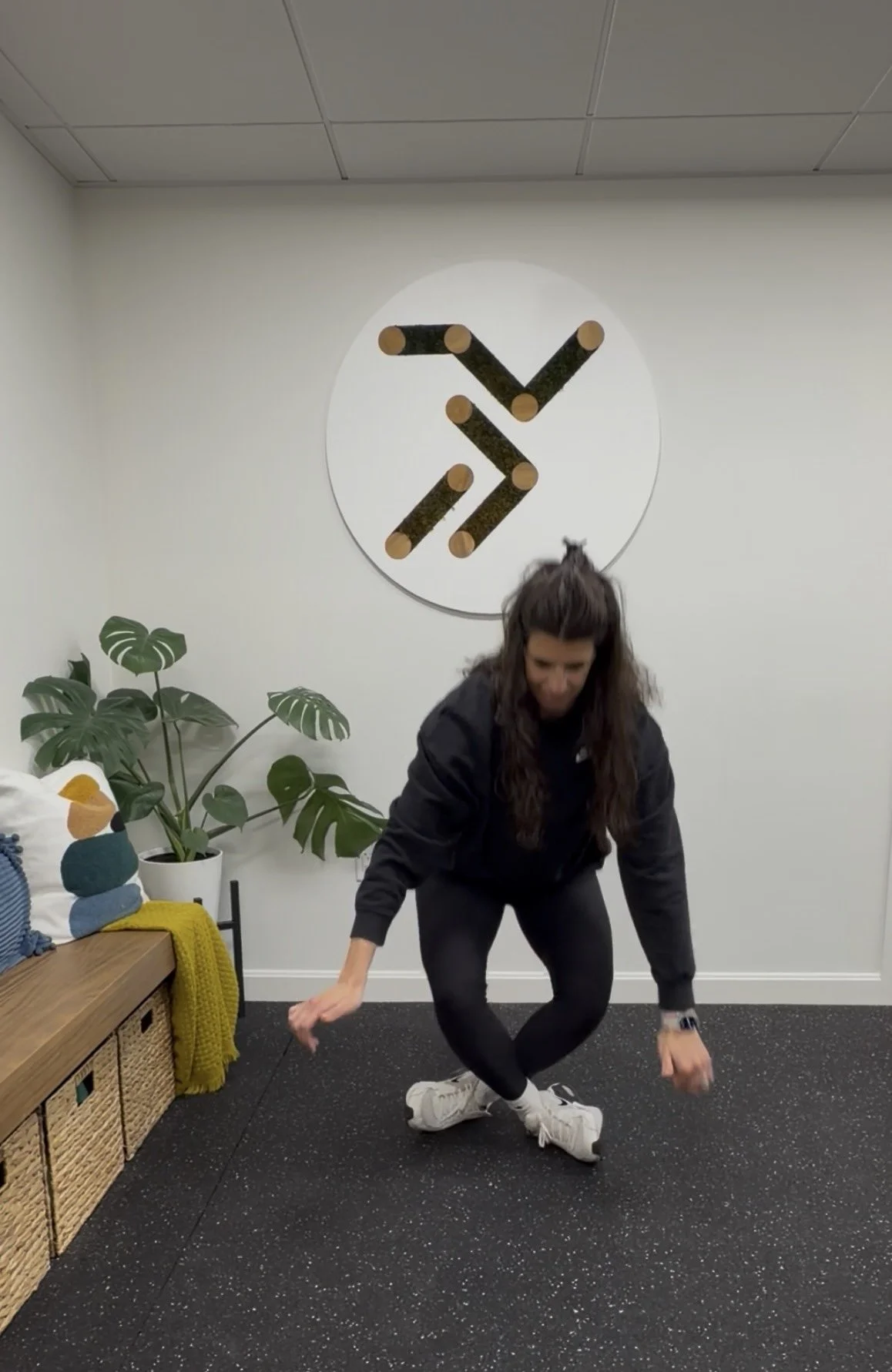
Cross one foot in front of the other.
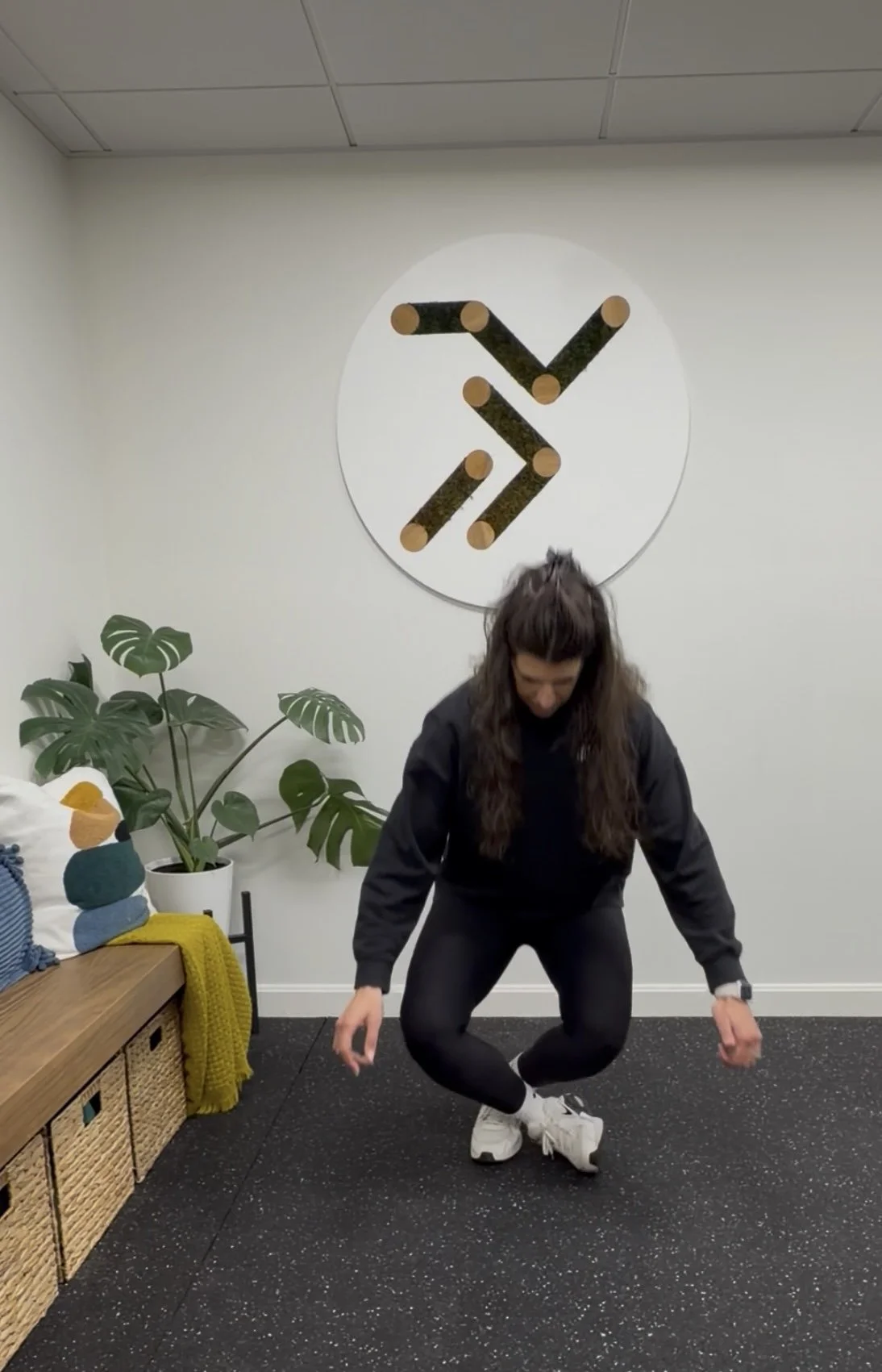
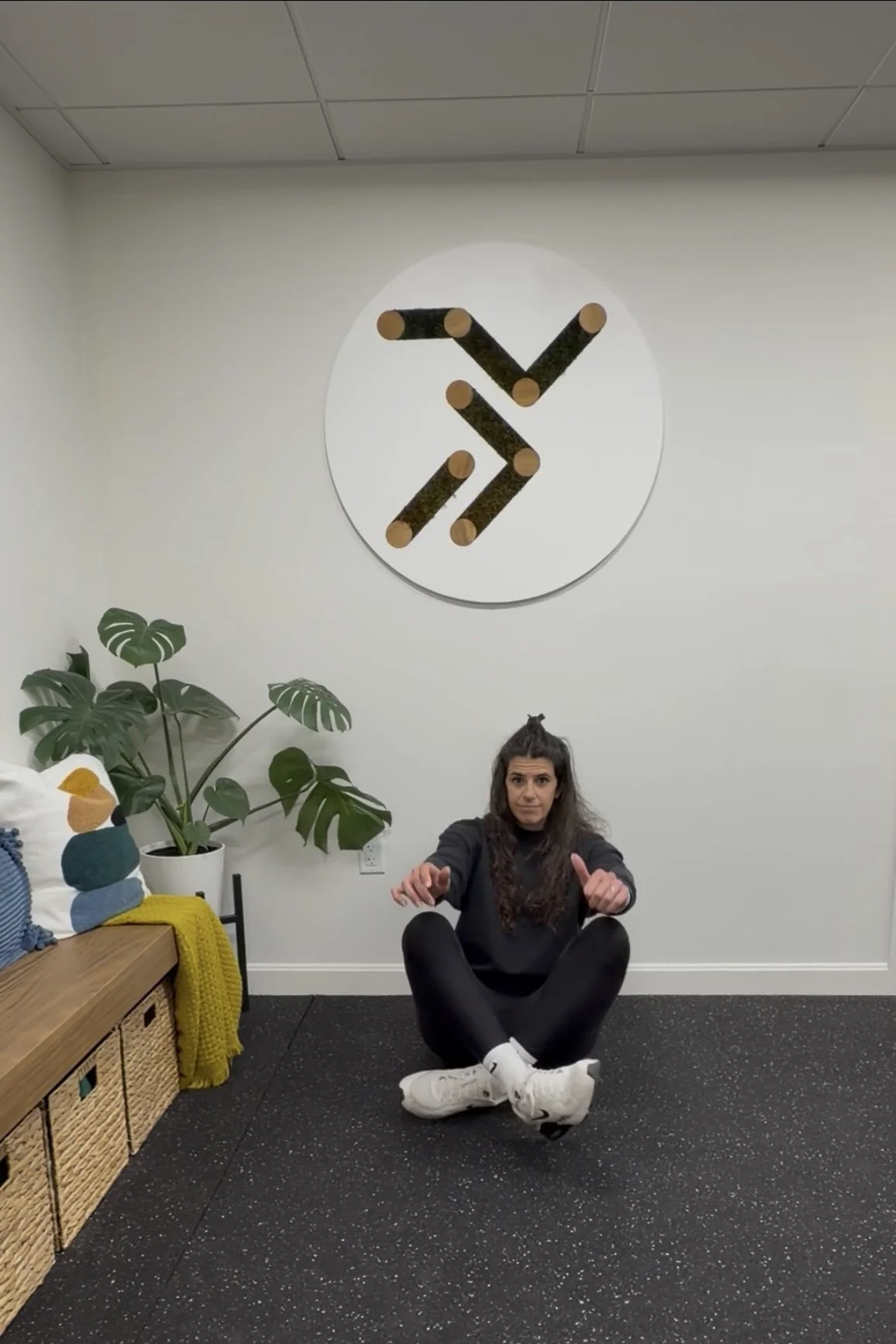
Lower yourself to a cross-legged seated position on the floor, using as little support as possible.
From that seated position, stand back up, again using as little support as possible.
That's it. Go slowly and under control. There are no bonus points for doing it quickly.
How to score it
You start with 10 points: 5 for sitting down and 5 for standing up. Your partner subtracts points for any help you use.
You lose one point for each of the following:
Hand touches the floor
Forearm touches the floor
Knee touches the floor
Side of your leg touches the floor
Hand touches your knee or thigh to push up
A noticeable wobble or loss of balance is - 0.5 points
Add your sitting and standing scores together for a total out of 10.
Example: you sit down smoothly with no help (5), then put one hand down and wobble a bit on the way up (5 − 1 − 0.5 = 3.5). Your total is 8.5.
What your score means
A 10 is Excellent, demonstrating solid coordinated strength, mobility, and balance
An 8 to 9.5 is Good. In the research, this range carried low risk.
A 4.5 to 7.5 is worth working on. Dr. Araújo considers scores below about 7.5 a reason for concern in healthy middle-aged and older adults.
A 0 to 4 indicates a definite need to train the various components of the test.
Scores tend to drift down with age, but that drift isn't fixed. Most of what the test measures responds well to training at any age.
If you're younger and active and still scored lower than you expected, don't panic. The research was done on people 46 and older. In our experience, fit adults who lose points usually have a mobility problem, not a strength problem. Tight hips that won't let you cross your legs, or stiff ankles that won't let you sit back, will cost you points even if you squat heavy. That's useful information, and it's very fixable.
Pay attention to where you lost points. Losing them on the way down usually points to mobility or control. Losing them on the way up usually points to leg strength, power, or balance. That tells you what to train.
What the test can't tell you
The sitting-rising test is a useful screen, but it has clear limits. Keep these in mind before you read too much into your number.
It shows a link, not a cause. Both studies are observational. They show that low scores and earlier death go together, not that one causes the other.
The study group was narrow. All participants came from a single exercise medicine clinic in Rio de Janeiro, so they weren't a random sample of the public. About two-thirds were men, and everyone was 46 or older. We don't know how well the results apply to younger adults, to women, or to other populations.
Scoring is a judgment call. Deciding whether you "wobbled" is subjective, and two partners may score you differently. Your score can also improve just from getting familiar with the movement, which isn't the same as getting fitter.
Your body's structure matters. Hip shape, limb length, old injuries, and arthritis can make the cross-legged position hard no matter how fit you are. A low score in those cases may tell you about your anatomy, not your health.
It skips aerobic fitness. Cardiovascular fitness is one of the strongest predictors of long-term health, and this test doesn't measure it. A great floor score doesn't cancel out a sedentary week.
The best way to use the test is as a starting point. It hints towards what you might need to train and gives you a way to track progress.
How to train it
The best way to get better at getting up off the floor is to get up off the floor, with just enough help to do it well. Pair that with a few exercises that build the qualities the test depends on.
1. Spend more time on the floor. Sit cross-legged or in other floor positions while you watch TV or read. Ten to twenty minutes a day builds hip mobility with no extra time in your schedule.
2. Open up your hips. 90/90 hip switches: sit with both knees bent at 90 degrees to one side, then rotate them to the other side. Use your hands at first and take them away as it gets easier. 2 sets of 8 to 10 switches.
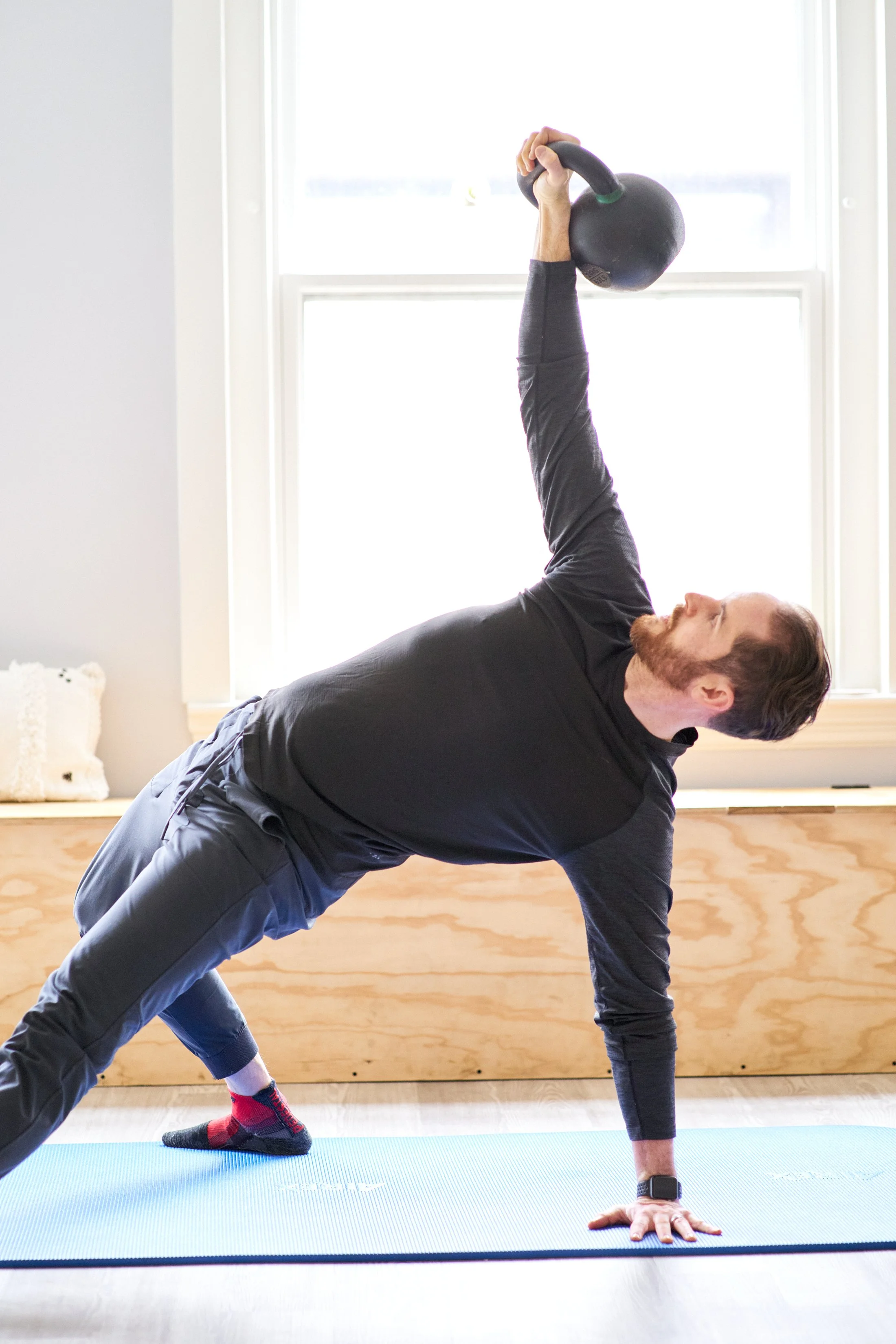
3. Build strength through a full range of motion. Goblet squats, reverse lunges, split squats, lateral lunges and Turkish Get Ups (pictured above) are great ways to build strength and improve range of motion
4. Practice kneeling stand-ups. From a half-kneeling position, stand up without using your hands. This trains the exact strength and balance of the second half of the test. 2 to 3 sets of 5 per side.
5. Practice the test itself, with less help over time. Do 3 to 5 slow reps of getting down and back up. Start with two hands for support, then one hand, then fingertips, then none.
When to get help
Come see us at Back Bay Health if the test brought out any crankiness in your hips, knees, or back, if your score didn't move after a month of practice, or if getting down to the floor makes you nervous. Pain and fear of falling are both very treatable. We'll figure out what's actually limiting you and build a plan around it.
Book an appointment OR a Free 15-minute discovery call
References
Brito LBB, Ricardo DR, Araújo DSMS, et al. Ability to sit and rise from the floor as a predictor of all-cause mortality. European Journal of Preventive Cardiology. 2014;21(7):892–898.
Araújo CGS, de Souza e Silva CG, Myers J, et al. Sitting–rising test scores predict natural and cardiovascular causes of deaths in middle-aged and older men and women. European Journal of Preventive Cardiology. 2025. doi:10.1093/eurjpc/zwaf325